
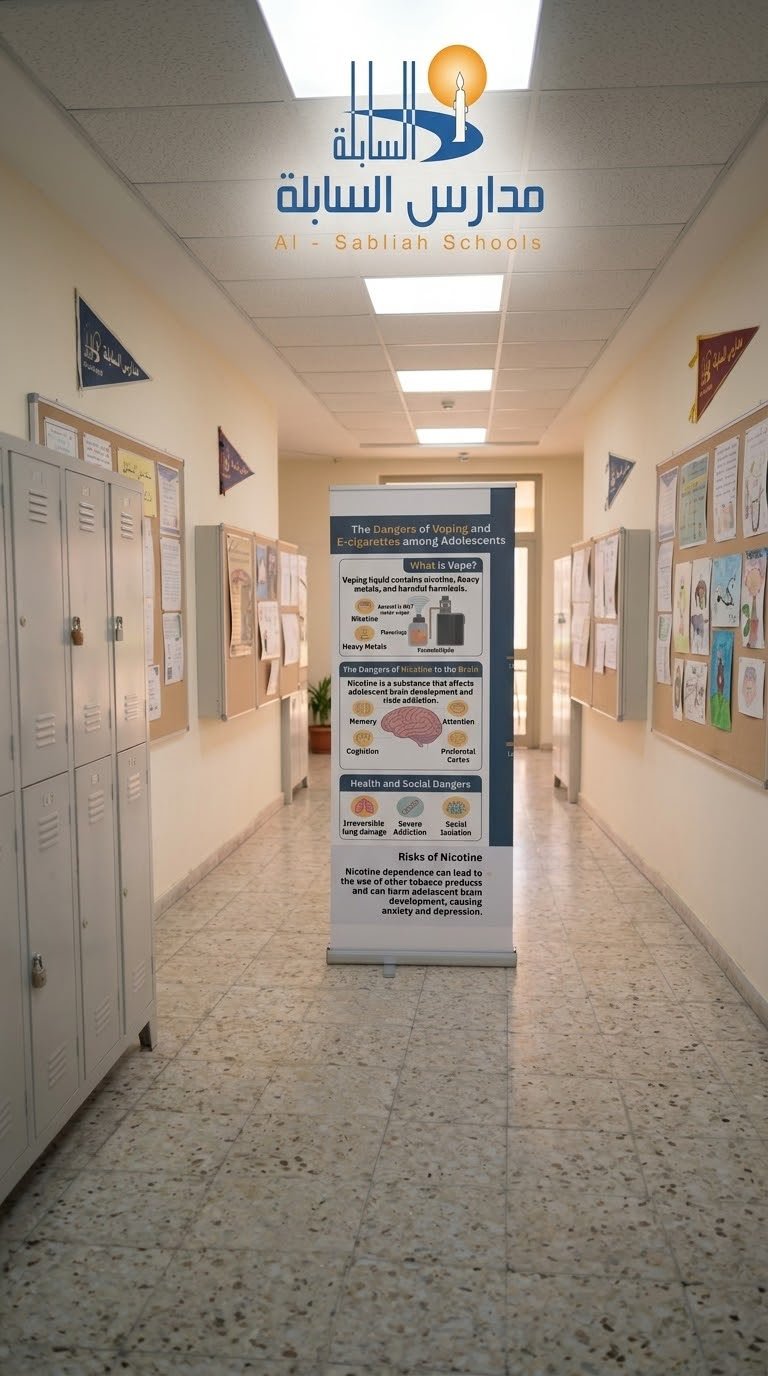
E-cigarettes have become a growing concern for parents and schools, especially with their increasing use among teenagers and school students. At first glance, these devices may appear very different from traditional cigarettes, but their different appearance does not mean that they are harmless.
Most e-cigarettes work by heating a liquid to produce an aerosol that is inhaled. This liquid may contain nicotine, flavorings, and other chemicals. The World Health Organization (WHO) states that e-cigarettes are not safe products and that nicotine can negatively affect the developing brains of children and adolescents.
For this reason, early awareness has become an important part of the role of families and schools in protecting students from nicotine dependence and habits that may begin as a simple experiment but eventually become difficult to quit.
What Are E-Cigarettes and How Do They Work?
E-cigarettes are electronic devices that heat a liquid inside the device and turn it into an aerosol that is inhaled.
In simple terms, these devices work by:
- Heating a liquid inside the device.
- Turning the liquid into an aerosol.
- Inhaling the aerosol through the mouth.
- The liquid may contain nicotine.
- It may also contain flavorings, additives, and various chemicals.
It is important to understand that the aerosol produced by e-cigarettes is not simply water vapor. It may contain nicotine and other potentially harmful substances, including certain chemicals and heavy metals.
Why Have E-Cigarettes Become Popular Among Teenagers?
Several factors can make e-cigarettes appealing to some teenagers, including:
- Variety of flavors: Different flavors can make the products more attractive to young people.
- Design: Some devices are small, easy to carry, and may resemble pens or electronic devices.
- Peer influence: A teenager may try an e-cigarette because of encouragement or pressure from friends.
- Curiosity: Some teenagers start simply because they want to know what using an e-cigarette feels like.
- Social media: Content that presents vaping in an attractive or positive way can influence how young people perceive it.
- The belief that they are less harmful: Some teenagers may believe e-cigarettes are safe because they do not look like traditional cigarettes.
- Exposure to users: Seeing family members or friends using e-cigarettes may make the behavior appear normal.
The Centers for Disease Control and Prevention (CDC) identifies curiosity, peer influence, and having family members or friends who use e-cigarettes among factors that may encourage young people to try them.
Are E-Cigarettes Safe Because They Are Not Traditional Cigarettes?
This is one of the most important misconceptions that needs to be corrected.
The fact that e-cigarettes do not contain traditional tobacco does not mean that they are safe.
Many e-cigarette products contain nicotine, which is highly addictive. The aerosol produced by these devices may also contain other chemicals that can be harmful.
For children and teenagers, the concern is even greater because the brain is still developing during adolescence.
Therefore, describing e-cigarettes as “just vapor” or as a “safe alternative” can give teenagers a misleading impression about the potential risks.
How Does Nicotine Affect Teenagers?
Nicotine is an addictive substance that can have a particularly significant impact on the developing brain.
Some of the major concerns associated with nicotine use during adolescence include:
- Effects on brain development.
- Effects on attention and concentration.
- Effects on learning.
- Effects on impulse control.
- Effects on mood.
- Increased risk of nicotine dependence.
- Greater difficulty quitting over time.
The brain continues developing until approximately age 25, making adolescence a particularly important period for preventing nicotine dependence.
Can E-Cigarettes Affect Academic Performance?
A student who begins using nicotine may not notice an immediate effect on their studies. However, nicotine dependence can gradually become part of their daily life.
Some problems may appear indirectly, such as:
- Constantly thinking about obtaining or using nicotine.
- Difficulty concentrating because of cravings.
- Feeling stressed or irritated when nicotine is unavailable.
- Thinking about or using e-cigarettes during the school day.
- Trying to hide e-cigarette use from parents and teachers.
- Changes in sleep or daily routines.
- Reduced interest in certain academic or social activities.
Therefore, e-cigarette use should not be viewed simply as a smoking habit. It can also become an issue connected to a student’s health, behavior, and educational environment.
Do E-Cigarettes Lead to Traditional Cigarette Smoking?
This is an important point when educating teenagers.
The World Health Organization reports strong evidence that e-cigarette use is associated with an increased likelihood of young people who do not previously smoke moving on to traditional cigarettes.
This means that trying e-cigarettes should not necessarily be viewed as an isolated experience separate from other tobacco products.
The story may begin with:
- “I just want to try it.”
- “Just once.”
- “All my friends use it.”
- “It isn’t really smoke.”
- “The flavor is good.”
- “I can stop whenever I want.”
However, the presence of nicotine can turn experimentation into dependence over time, making it increasingly difficult to quit.
What Signs Can Help Parents Notice a Potential Problem?
None of the following signs necessarily means that a student is using e-cigarettes. However, noticing several changes at the same time may be a reason to have a calm conversation with the student.
Parents can pay attention to:
- An unfamiliar electronic device among the student’s belongings.
- E-cigarette-related cartridges, bottles, or liquids.
- Unexplained spending or missing money.
- Sudden changes in friendships.
- Attempts to hide personal belongings.
- Increased irritability or anxiety when the device is unavailable.
- Sudden interest in e-cigarette flavors or products.
- Frequently leaving a room or location to use the device.
- Noticeable changes in daily routines.
Most importantly, parents should focus not only on identifying signs but also on maintaining open communication. A relationship based on trust can make it easier for students to talk about the pressures and challenges they are experiencing.
Why Might a Student Start Using E-Cigarettes?
To understand the problem, it is important to look for the reason behind the behavior rather than focusing only on the behavior itself.
Possible reasons include:
1. Peer Pressure
A student may feel that they need to try e-cigarettes to avoid feeling different from their social group.
2. Curiosity
The experience may begin simply out of curiosity, without the student fully understanding the risks associated with nicotine.
3. Imitation
Students can be influenced by friends, family members, or public figures and online personalities they follow.
4. Wanting to Appear Older
Some teenagers may believe that using e-cigarettes makes them look more independent, mature, or grown-up.
5. Coping With Stress
Some students may use nicotine because they believe it helps them relax. However, nicotine dependence can create a cycle of cravings, use, and discomfort when nicotine is unavailable.
6. Exposure to Digital Content
Content that presents e-cigarettes in an attractive or positive way can influence teenagers’ perceptions and make vaping appear normal or harmless.
What Is the Role of the Family in Preventing E-Cigarette Use?
Prevention should begin before a problem develops.
Parents can take several simple steps:
- Talk to their children about vaping and e-cigarettes at an early age.
- Explain the risks in a way that is appropriate for the student’s age.
- Avoid relying only on fear-based messages.
- Listen to the student’s questions without making fun of them.
- Know who their child’s friends are without turning the relationship into constant interrogation.
- Set a positive example at home.
- Teach children how to deal with peer pressure.
- Encourage sports, hobbies, and healthy activities.
- Monitor digital content in a balanced way.
- Build a relationship in which the student feels comfortable asking for help.
The goal is not simply for students to say “no” to e-cigarettes, but to understand why they should say no.
How Can Schools Help Prevent E-Cigarette Use?
Schools have an essential role because students spend a significant part of their day in the school environment.
Schools can help through:
- Organizing educational and awareness sessions for students.
- Providing clear and simple information about nicotine.
- Teaching students how to deal with peer pressure.
- Encouraging sports, cultural, and extracurricular activities.
- Creating a supportive school environment.
- Encouraging students to seek help when facing a problem.
- Working with parents when signs require further intervention.
- Establishing clear policies regarding smoking and e-cigarette use.
- Educating teachers and school counselors about the issue.
- Responding to students in an educational and supportive way rather than through humiliation or punishment alone.
How Should We Talk to a Student Who Uses E-Cigarettes?
If parents or school staff discover that a student is using e-cigarettes, the initial reaction can have a significant impact on what happens next.
Instead of:
- Yelling.
- Threatening.
- Insulting.
- Comparing the student to others.
- Ignoring the problem.
Adults can begin with a calm conversation using questions such as:
- What made you start?
- Did someone encourage you to try it?
- Are you using it because of stress or pressure?
- Are you trying to stop but finding it difficult?
- What attracts you to it the most?
- Do you feel that you need it during the day?
This type of conversation can help identify the real reason behind the behavior rather than simply punishing the student without addressing the underlying cause.
What If a Student Wants to Stop Using E-Cigarettes?
Quitting nicotine can be difficult, especially when vaping has become a regular habit.
Students can seek support from:
- Parents.
- School counselors.
- Doctors or healthcare professionals.
- A trusted adult.
- Appropriate health services.
It can also be helpful to identify the triggers that encourage e-cigarette use, such as:
- Being around friends who vape.
- Stress.
- Boredom.
- Certain times of the day.
- Social media use.
- Having the device nearby.
The student can then work on reducing exposure to these triggers and replacing the habit with healthier activities.
Ten Important Messages Every Student Should Know About E-Cigarettes
- E-cigarettes are not simply water vapor.
- Many e-cigarette products contain nicotine.
- Nicotine is an addictive substance that can lead to dependence.
- The teenage brain is still developing.
- Nicotine can affect attention, learning, and mood.
- Attractive flavors and designs do not mean that a product is safe.
- Experimenting with e-cigarettes can turn into a regular habit.
- E-cigarette use is associated with an increased likelihood of transitioning to traditional cigarettes among young people who do not previously smoke.
- Asking for help is not a sign of weakness.
- The best way to avoid the risks associated with e-cigarettes is not to start using them.
Raising awareness about the risks of e-cigarettes is not the responsibility of students alone. It is a shared responsibility between families, schools, and the wider community.
Students need accurate information, calm conversations, and an environment that encourages them to make healthy decisions rather than relying solely on punishment after a problem occurs.
At school, education is not limited to books and exams. It also involves helping students build their character, strengthen their awareness, and make decisions that protect their health and their future.
Prevention begins with information, communication, and trust.